Deadheading both annuals and perennials isn’t only done to keep them neat and tidy, it’s also
done to encourage more blooms! A plant’s main reason for existence (besides giving us
enjoyment, of course) is to create seeds to produce the next generation. They create blooms to
attract pollinators, and once they have been pollinated, they set seeds and the blooms die. The
seeds then start the whole process again.
By deadheading properly, you are interrupting that cycle, so the plants have to start it all over
again by forming more blooms. If this is done regularly, you can extend the bloom time
considerably. With perennials, this process isn’t quite as dramatic, but it still benefits the plant
by directing energy into the roots and creating a stronger overall plant for the following year.
To deadhead a plant (either annual or perennial), it’s important to take the entire flower off,
not just the petals. The petals are only there to attract pollinators (and us!). The rest of the
flower is the part that creates the seeds. If that isn’t removed, the plant will continue the cycle
by making seeds, and you won’t get more blooms.
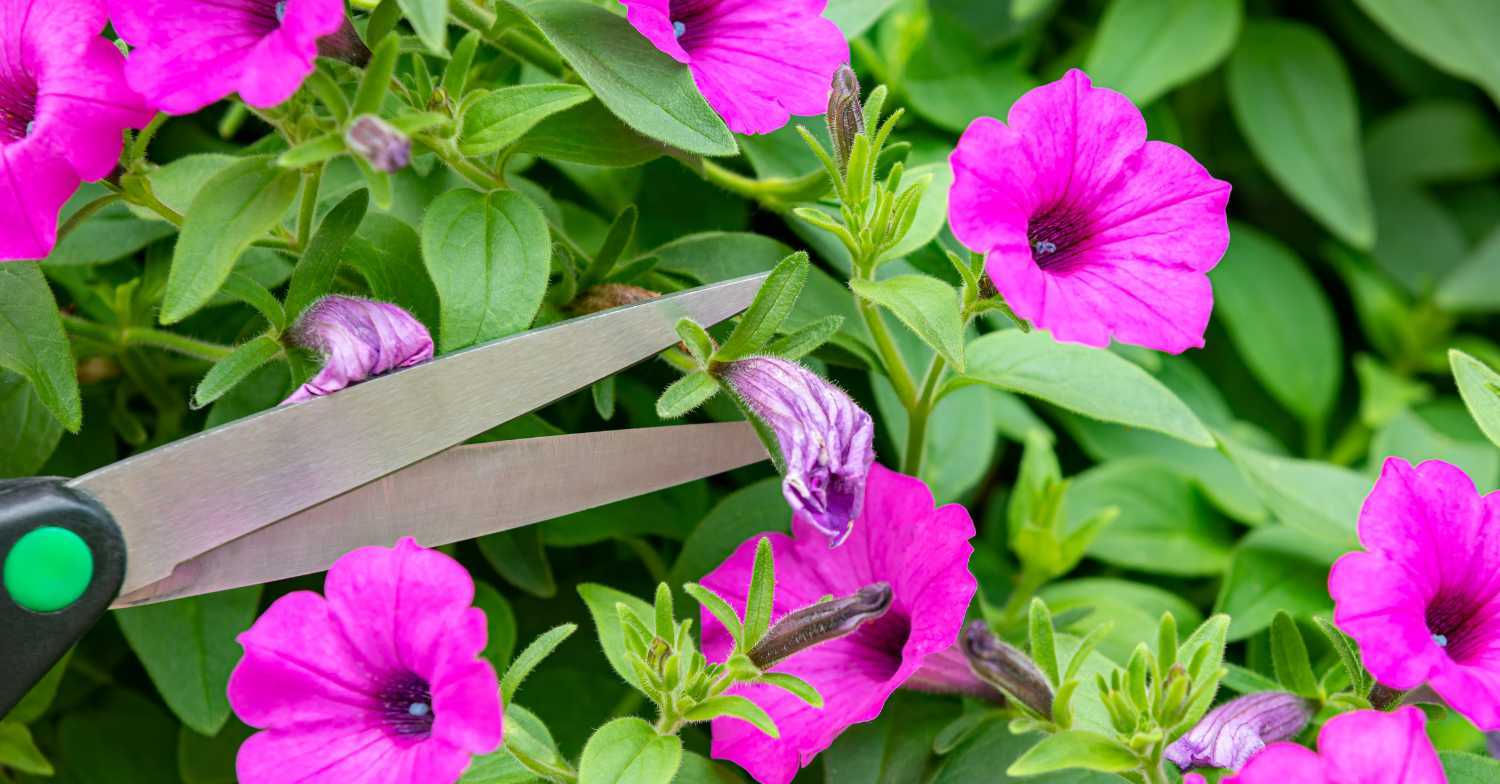
With most annuals, you only need to snip the bloom back to where it joins the plant stem,
therefore removing the entire bloom.
There are some annuals that are slightly different. The most common one is the geranium. The
basic idea is the same as before, but the cluster of blooms is on a longer stem. If you have the
patience, the dead blooms in the cluster can be removed individually, but when they start
looking tired, the whole long stem should be removed. This is done by following the cluster
stem down to where it joins the branch of the plant and snapping it off there. If a long piece is
left, the plant will continue trying to keep it alive, and you will end up with dead twigs that can
be unsightly.
This same theory can be used on perennials with long bloom stems such as iris, lilies, or even
hostas. You can take individual blooms off the cluster at the top of the stem, but once they are
finished, you should remove the main flower stem at the ground. This also encourages the
plant to put its energy into the root system for the remainder of the season and the following
year.
Now, let’s talk about a perennial that is a bit of a pet peeve of mine, the peony. Although they
are stunning, they have a heavy bloom on a stem that sits well above the leaves. When the
bloom dies, it can be very messy, and the seeds are not very attractive. Many people snip the
bloom off, which is great, but because of the long bloom stem, you are left with bare stems
sticking up above the leaves. When you deadhead, cut the stem back below the leaves to a
stem or leaf junction, and you are left with a nice, tidy looking plant.
There are also some perennials that many people choose not to deadhead because they have
attractive seed heads, such as coneflowers. This is totally up to you. Not deadheading doesn’t
hurt the plant, in fact leaving the dead flowers or seed pods can provide a food source for wildlife.
Remember, it’s your garden, and you can choose how you want to manage it!
Written by WGC Employee Janet