There’s something invigorating about filling your home with plants. Not in an over-the-top jungle kind of way, just a few plants that make the space feel a little more alive.
When I was a child, every few years my mother would come home from the hospital with another little brother (six in total). The baby's room was prepared and all the little baby clothes washed up and ready with that really nice smelling baby soap. My mother once told me that you can’t put plants in a baby’s room because it will use up all the oxygen and the baby would die. I think this was a bit of fear with good intentions, like so many old wives’ tales, not only incorrect but the opposite is actually true!
I found an interesting study from NASA about the benefits from certain houseplants for not only producing oxygen in our homes during the day some have been found to produce oxygen 24 hours a day!
The four standouts for benefits in the home are the snake plant, spider plant (not included in the NASA study), English ivy, and gerbera daisy. Each one brings their own unique traits and benefits.
Let’s start with the snake plant (also known as Mother in Laws tongue, LOVE that!). This one is a powerhouse. Tall, stunning, and almost sculptural, it doubles as a natural showpiece in any room. Beyond looks, it has a unique trait, it continues to release oxygen 24 hours a day, even at night without sunlight. This makes it a popular choice for bedrooms, especially in spaces where airflow might be limited. It’s also incredibly forgiving, low light, drought tolerant, and general neglect it handles it all without complaint. It actually prefers to be a little root bound and cramped in its pot. On top of that, snake plants are easy to propagate, so one plant can quickly turn one into several easily creating enough to have a plant in every room of your home.
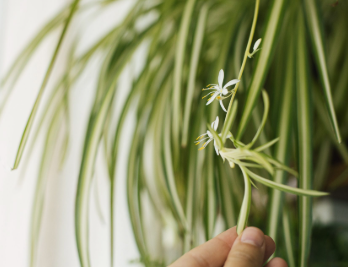
The spider plant brings a completely different kind of energy. Where the snake plant is structured and upright, the spider plant is fun, flowing and expressive. Its long, arching leaves and dangling “babies” make it feel almost playful. It’s also one of the best choices for homes with pets, as it’s non-toxic and safe if a curious cat or dog (like my Jack Russell “terror”) decides to take a nibble. Like the snake plant, it’s incredibly easy to propagate those little “babies” they can be replanted to grow your collection effortlessly. Either rooted in water or planted directly into new soil. Some sources say it is the same as the snake plant and produces oxygen 24 hours a day, and other sources say only during the day. Although not definitive I feel that there is enough support out there in favor of it also being a 24-hour oxygen producer so I am confident there is a good chance it is true. It also adapts well to low light, making it a great option for shelves, corners, or hanging baskets. For something more creative, you can even style spider plants into bonsai style tree for a unique visual twist.
Then there’s English ivy, which adds softness and movement. Let it trail from a shelf or cascade from a hanging planter, and it instantly breaks up the hard lines of a room. Ivy is particularly good at catching airborne particles like dust, pollen, and dander on its leaves, helping to subtly improve the feel of the air around you. It brings a slightly wild, natural texture indoors something our brains tend to find calming, even if we don’t consciously notice it.
And finally, the gerbera daisy, the bright, cheerful overachiever of the group. Known for its vibrant blooms, it’s more than just a pretty face. In controlled studies, it is ranked the top plant for removing certain toxins from the air according to the study from NASA, making it a strong daytime contributor to your indoor environment. While it doesn’t produce oxygen at night like the snake plant, it more than makes up for it with its daytime performance detoxifying the space and the simple mood boost that comes from having fresh, colorful flowers in your home.
When you put these four together, you get a nice balance. The snake plant works quietly around the clock, the spider plant adds resilience and versatility, the ivy softens and filters, and the gerbera daisy brightens and refreshes. They each play a role, and none of them demand too much in return.
There’s also something to be said for how these plants make you feel. Even if the increase in oxygen is subtle, many people report sleeping better, feeling more rested, and enjoying a calmer atmosphere especially in rooms where windows aren’t always open. Add in the gentle filtering of airborne particles like dust and pollen, and you’ve got a small but meaningful upgrade to your living space.
And if you find yourself wanting to expand beyond these four, a quick nod goes to dracaena and peace lily both well known for their ability to help remove indoor toxins and just as capable of elevating a room.
Cautionary old wives’ tales perhaps started out with the very best of intentions and while we know that there are plants that should be avoided in our homes due to toxicity and possible harm to pets and children if ingested most are perfectly safe to have in your home.
House plants do a lot more than just “sit there and look nice.” A few well chosen plants, from Windermere Garden Center can subtly shift the entire feel of a space making it cleaner, calmer.
Written by WGC Employee Elaine K.